201511112_5After the Iranian government imposed a filmmaking ban on him for “propaganda against the regime”, Jafar Panahi was forced to make movies in secret. Tehran Taxi is his third film since, following This Is Not A Film (2011) and Closed Curtain (2013), which were both made inside his home. Panama ventures out to streets of Tehran under the guise of driving a taxi, although he has barely any sense of direction and no desire to take money from commuters.

Panahi is accused by one of his passengers of staging a particular, quite far fetched event. Is it staged? Does it even matter? While we can assume, the ratio of real to reel is never explicit and short of that scene, involving an injured man being driven to the hospital after an accident, the content appears very authentic. There is a lightheartedness that almost always sugarcoats the more serious undertones but one theme that is universal is that of humanity. Panahi introduces us to people who long for a free, democratic society where there are equal rights regardless of gender or social status and for a day when their country doesn’t hold one of the highest execution rates (second only to China).

Towards the end of the film, we meet Panahi’s niece Hana, an intelligent and curious girl who wants to discuss her filmmaking assignment with her uncle. She has been given strict guidelines by her teacher – the names of her characters should be Islamic, not Iranian and there is to be no trace of politics, economics or what she calls ‘sordid realism’. It’s here where the story becomes quite meta and we are exposed to a dialogue of self-reflection for Panahi. In a place where it would be so easy to be a pessimist (or a ‘sordid realist’), Panahi succeeds time and time again in everlasting and contagious optimism. While this ‘sordid realism’ will always be present in Panahi’s life, the glass is always half full because it just can’t be any other way.

This is a whole other kind of ‘candid’ camera, exposing us to just how ‘normal’ life is in Tehran. There are clear limitations to the scope of Panahi’s filmmaking these days, yet he still manages to create a transfixing narrative with the little resources he has available. This is incredibly worthwhile viewing, Panahi is an artist that refuses to be silence by those who many would cower from.

★★★★☆

Social networking has undoubtedly revolutionized many aspects of communication, with Australians motivated to see Australian films based marketing and the influence of social media more than any other reason.

The research, undertaken by Film Victoria, found Australian audiences believed the reason Australian films attracted low audience numbers domestically was a lack of awareness, caused by insufficient publicity.

Associate Professor of Media and Communication at RMIT University Deb Verhoeven says national distinctions are not part of how people decide what films to watch.

“We don’t normally sit around with our friends deciding whether or not we are going to see an “Australian” film any more than we debate whether we might like to see a Norwegian one,” she says.

Bradley Dixon, web coordinator at the Australian Film Institute, says the rise of social media has changed the way recommendations work for everybody.

“It’s accepted wisdom now with access to film and television content becoming more and more immediate, traditional recommendation sources like professional film critics have become less important to the success or failure of a film,” he says.

Marketing has been cited as a strong factor for audience’ decision making and awareness of Australian films, with the current relatively low box office statistics point to a need for stronger and more sustained strategies.

However Verhoeven doesn’t think we release enough Australian films in this country to know this definitively.

“When talking about ‘Brand Australia’ and its relationship to cinema, it’s pointless heavily marketing films because they are Australian and that audiences then find disappointing – this will only reflect badly on ‘Brand Australia’,” she says.

Verhoeven says recent research suggests social media is an influence on the films Australians watch, but only if it comes from trusted sources, such as friends on Facebook, rather than strangers on Twitter.

“Social media works as an influencer in much the same way as word of mouth,” Verhoeven says.

However Dixon believes that it’s not a distinction between social media platforms/technologies as much as it is a distinction between people.

“Most people have several tiers of influences on their viewing habits: very close friends and family who share the same tastes and whose recommendations can be trusted entirely, friends and acquaintances whose tastes you mostly/sometimes agree with, critics and people on social media whose opinions you trust, and then the wider film critic and social networking sphere.”

A spokesperson from Film Victoria cites the expense and time involved in marketing as a constant problem for Australian film.

“Marketing is very expensive and time consuming and needs to be very strategic. It’s usually left til the last minute and is often too late to build an audience.”

With social networking sites acting as news breakers, it seems as though audiences are more likely to trust their friends through recommendations on Facebook, than the suggestions of strangers on Twitter.

Film Victoria has also found in a time where social media is more prevalent, recommendations from friends have more currency than those from strangers, especially when those strangers might be getting paid for their commentary.

The rise of Bikram Yoga has certainly taken Melbourne by storm. With numerous studios opening up in the metropolitan area, its popularity can’t be doubted. While some are claiming Bikram’s benefits don’t outweigh the potential health risks, studio owner Michael Houghton assures there is no specific danger for the vast majority of people.

CHLOE SESTA JACOBS: Yoga is one of the most widely practised forms of exercise. The system is thousands of years old, however since the late 1970s the world saw a new form in Bikram yoga. Bikram sessions run for exactly 90 minutes and consist of a series of 26 postures and two breathing exercises, but all the while in a room heated to 40 degrees Celsius. With many participants liking the experience to therapy and claiming they see instant results, it’s no surprise Bikram has taken the world by storm. MICHAEL HOUGHTON completed the teacher-training course with founder Bikram Choudhury himself and now runs Bikram Yoga Fitzroy, one of Melbourne’s most well-known studios.

MICHAEL HOUGHTON: Our introduction to Bikram began in about 2001, my wife had been visiting her sister in the States who was a Bikram student, she’s a yoga teacher but she was practising Bikram, and she gave Susan, my wife, Bikram’s first book and a cassette of his class. She brought that back to Melbourne and there were no Bikram studios in Melbourne so we began by practising in our bedroom in a closet with the heater on, in front of a mirror, reading the book to each other trying to figure what it was all about, because there was no studio in Melbourne.

CSJ: As a chiropractor, Houghton was attracted to the practise because of his patients looking for muscular skeletal management. It personally helped both him and his wife so much that they decided to become teachers and eventually studio owners.

MH: There are hundreds of bikram studios in countries around the world. I think the reason people have found it very popular is just due to the fact that when they come into the practise it seems to be just a physical practise, it draws people in for the physical exercise, it doesn’t put a lot of emphasis on the meditative side of the practise, that just happens unexpectedly and people come in beginning a physical practise, but then they begin to discover there’s something much more deeper to it.

CSJ: Regular bikram attendee JANITA DOELKEN lists numerous benefits to the practise, however states that Bikram was certainly not easy from the beginning.

JANITA DOELKEN: It was definitely difficult for me to stay in the room, to go through the one and a half hours, when you do it the first time it’s very exhausting for your body, but the second time was already an awesome experience which is why I kept doing it. Now I don’t even feel the heat anymore, I just see it as a normal exercise. There are definitely positive effects on my spine, which is why I started doing yoga, and then bikram yoga, for the extra effect of sweating everything out of your body, basically.

CSJ: While there are countless rewards from regular participation, some list other worrying factors such as dehydration and cardiovascular stress.

MH: Bikram being labelled dangerous is a little bit of an odd description because from my point of view, as a muscular skeletal professional, placing the body into the heated environment is actually a much safer place to move and to stretch and to open the body up. The heat softens the soft tissue, the heat allows a deeper, more guided movement into posture, stretching and opening muscles, even stretching and opening scar tissue.

CSJ: Acting as both a physical and mental discipline, Bikram is undoubtedly making a change in people’s lives which is why they keep coming back for more.

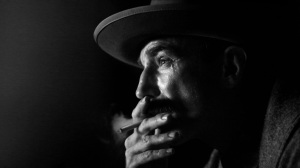
1405009Written and directed by cinematic great Paul Thomas Anderson, There Will Be Blood is loosely based on Upton Sinclair’s 1927 novel ‘Oil’. Following the rise and rapid decline of self proclaimed “oil man” Daniel Plainview, whose fall from grace is less than noble, this film is known for the haunting, Oscar winning performance of Daniel Day-Lewis in the leading role.

Undeniably epic, there is never a dull moment. At 158 minutes you’re in for the long haul, but even the slow, scenic panning shots are unlike no other, especially since they’re accompanied by Johnny Greenwood’s incredibly memorable score.

1. The Opening Scene

The film’s title appears on screen in white against a black background, the gothic font instantly evoking biblical undertones. The first shot is a wide and barren landscape, accompanied with an eerie score, filling the audience with unease.

The score is almost like that of a horror movie, instantly intriguing the audience. Relatively uncommon in cinema today, this opening sequence is essentially it’s own silent film, a dialogue-free, mesmerising introduction of just under 15 minutes. It is the year 1898 and we see Plainview working in extremely rigorous and labour intensive conditions, but this seems to push him harder rather than deter him. These harsh and dangerous working conditions work to show us how committed Plainview is to his cause, willing to put himself and the workers around him in life threatening conditions.

There is absolutely no need for dialogue, as the visuals speak for themselves. The introduction of Plainview as a hardworking man with endless ambition foreshadows the narrative and shows us he is willing to risk everything to conquer.

One of Plainview’s workers is killed on the job and leaves an infant behind. Plainview is ill equipped to be a father, but like most things in his life, he sees the young child as an investment, a tool to further himself. At the end of the opening sequence, Plainview and his new son HW are riding off on a train, one of the only times throughout There Will Be Blood that warmth and comfort pours from the otherwise stoic man. It is obvious that he has adopted HW as his own and initially it seems as though Plainview has formed a bond with the child, as the infant seems enamoured with him.

The next time we see Plainview – 13 years later – he has emerged as a grandiose figure, immensely self-assured and confident.

2. Timeless Themes

Old fashioned but forever relevant, the central themes of There Will Be Blood are timeless. This is the story of the loss of one man’s soul as he rises to riches, encompassing religion, money, greed and power, all just as relevant now as they were when the film was set.

There Will Be Blood undoubtedly transcends the time in which it was set and is a prelude to the driving force of American capitalism we were to see in the 20th century. More prevalent than ever, oil is the foundation of American greed and religion is the cause of most conflicts, just as they are throughout the film.

Plainview claims to be all about equal distribution of wealth in his search for oil. Quite early on he tells his audience he hopes they’ll forgive good old-fashioned plain speaking. His surname is no coincidence. Labelling his work as a ‘family enterprise’, he is moving himself further away from the lone, dictator he truly is. The people of Little Boston are captivated by his self-assured nature and his use of large words and persuasive language. They believe he is there for a mutually beneficial deal, but we know this isn’t the case. This is very much an all too familiar instance of the illiterate being taken advantage of simply because they are susceptible to a spectacle put on by a confident and well spoken man. They simply don’t know any better.

3. Daniel Day-Lewis

There Will Be Blood is Daniel Day Lewis’s film. He is in almost every scene, his presence always commanding. Even for the brief moments where he isn’t on the screen he is always on the minds of the audience.

It was as though the Academy Award was in his hands from the moment he stepped into Plainview’s shoes and rightfully so. There Will Be Blood gave Day-Lewis the opportunity to raise the bar even higher than before. Day-Lewis transforms into an enormous and hypnotic figure, looking down on everyone around him. He displays a rainbow of human behaviour, but specialises in the loathing of mankind, which includes himself.

While Paul Dano gives an incredible supporting performance, it is hard to leave There Will Be Blood thinking about anyone but Day-Lewis. From his voice to his stoicism, there is no doubt this film could not have been made without him.

4. The Constant Clash Between Two Egos

At the heart of There Will Be Blood is the relationship between Plainview and the seemingly naïve and innocent Eli. While it is easy to label Plainview as the sole antagonist, it is very important to remember that both men are corrupt and consumed by their cause.

Their relationship throughout the film is a constant confrontation. When negotiating the cost to drill on the Sunday’s land, Eli mentions there is in fact something that Plainview doesn’t know. While this might cement Plainview’s frustration and contempt for him very early on, he has the last laugh as Eli’s capacity to do business is incredibly limited. Plainview takes full advantage of his ignorance and lack of experience to pay him and his family less than they deserve.

Money is everything to Plainview and it is oil, not blood that runs through his veins. He tells Eli he’ll happily be a supporter of his church for as long as possible, but this is no philanthropy, it is entirely self-serving. While Eli still needs money in order for his church to survive, the battle between him and Plainview is essentially one of God vs money – Eli is a prophet of God while Plainview is a prophet of profit.

Plainview looks upon the workings of the church with disdain, as there is no God in his eyes. He also believes there is nothing worse than spiritual fraudulence, which is why he despises Eli and wants nothing more than to bring about his downfall He doesn’t want any help from the church and when Eli stresses the importance of blessing the well, Plainview can’t even feign an interest, subtly patronising him then speeding through the service with no regard for the religious folk of the town.

Plainview tells the crowd he is better at drilling holes in the ground than making speeches, but we know this isn’t true. He is all about the power of words, however when it comes to religion and God, he has nothing to say and wants absolutely nothing to do with any kind of practice. Plainview takes great pride in slapping Eli around when he gets the chance, but Eli gets his revenge when Plainview is forced into being baptised for a business deal.

5. Breathtaking Cinematography

There Will Be Blood occurs primarily outdoors, which is integral to the story. Plainview communicates best with the earth, as we know he has little to no need for people.

Cinematographer Robert Elswit, who had shot all of Paul Thomas Anderson’s previous features; Hard Eight, Boogie Nights, Magnolia and Punch Drunk Love picked up an Academy Award for his work on There Will Be Blood and rightfully so. Full of long tracking shots along empty landscapes, Elswit was able to transform barren surroundings to postcard views.

While the colour scheme is predominantly dark, in accordance with the colours of soil and the earth, throughout the film’s entirety we are exposed to a full colour palate. We see rich greens from the bushland, to fiery oranges and yellows during the oilrig explosion. This creates an intense visual, making the story even more grandiose. Plainview’s men run around and try to contain the fire and the monster they have unleashed. Plainview exclaims, “What are you looking so miserable about? There’s a whole ocean of oil under our feet!” Covered in oil and almost blending into the night behind him, he would rather sit by and watch the flames than attend to his injured child. As soon as HW is deemed damaged goods, he is of no real use and therefore tossed aside.

This scene of darkness and disarray is juxtaposed with one of the more beautiful and telling shots. It takes place when Plainview and his ‘brother’ Henry are on the beach after swimming in the ocean. Seeing Plainview in the bright light of day, both in the clear ocean and on the sand, might be the most pure we see him in the entire film. Due to a slip of the tongue, Plainview finally sees Henry for what he is, an imposter. The camera pulls back to show the two men sitting on the sand, Henry with his head in his hands in the shadows, and Plainview looking down on him in the sunshine. Showing Plainview in the light doesn’t last long, however, with the realisation plunging him to a darker place than ever before.

6. Johnny Greenwood’s Score
After his initial contact with Paul Thomas Anderson, Radiohead’s Johnny Greenwood wrote hours and hours of music for the film, but in the end they tightened it to 33 minutes.
The final result almost belongs in a horror movie, alluding we should be afraid of something, yet we don’t quite know what. It soothes us one minute and unsettles us the next. The tones are often menacing and mischievous, the intimidating music perfectly suited to the man at the centre of the film.There Will Be Blood is full of dialogue with a soundtrack free of words. The score accompanies the visuals and story beautifully, carrying the film along by filling the dialogue free gaps with music perfectly continuing the story.

7. Realism vs Spectacle

While it is very easy to label Plainview a monster, denying any humanity, Paul Thomas Anderson is always giving subtle hints and clues about characters and events that aren’t completely explained, so his audience are always left thinking and wondering about the film. By blurring these lines, the audience isn’t always entirely sure which side they should lean towards. Is Plainview a soulless monster, or is there more to him? Is Eli as naïve as he seems?

Plainview is an incredibly persuasive man who strongly believes in the power of his words, speaking almost entirely in the indicative mood throughout the film. He makes declarations rather than forming questions and will stop at nothing to achieve his ends. He has no friends, hates everyone and never tries to cover up his contempt. Plainview openly says there is nothing worth liking in anyone; he never wants anyone else to succeed and always sees the worst in people. Eli accuses Plainview of lusting after women, but we know this isn’t the case. This is entirely a man’s world and the only pleasure Plainview craves is the pleasure he gets from succeeding and triumphing over others. Eli is supposed to be the ‘good guy’, but by the end we’re really not sure who is worse.

8. “I Drink Your Milkshake!”

This iconic analogy is arguably the film’s most quotable line.

In the year 1927, Plainview is rich, drunk and very alone, living in a mansion that seems to have everything, including a bowling alley. The sheer size of his surroundings only isolates him even more. He seems content with his circumstances, his madness as his only companion.

After a verbal altercation with Eli, where the young man doesn’t seem to understand the scope of Plainview’s influence in the oil world, he informs the preacher of the following: “If you have a milkshake and I have a milkshake and I have a straw, my straw reaches across the room and starts to drink your milkshake, I drink your milkshake! I DRINK IT UP!”

It is this analogy that is the prelude to Eli’s murder. Plainview has had enough of the preacher’s ignorance and finally decides he is not fit for this world.

9. Daniel Plainview: Portrait of an Anti-Hero

Plainview’s transfixing descent into madness is one of the most compelling portraits of an anti-hero we have seen in cinematic history. The man is entirely one-dimensional, there is no ambiguity here. Once he sets his sights on something, he gets it one way or another. He is determined and persistent and will never encounter a wasted opportunity.

His story could be likened to a car crash that keeps getting worse. Plainview is continuously descending further and further into madness. To say he is ambitious would be a gross understatement. His hands are very dirty, but it’s a non-issue for him. He is completely consumed by his will to succeed and definitely not the kind of man audiences ordinarily root for.

Most of the cause and effect throughout the film originate with characters, most notably Henry coming into Plainview’s life. The sequences we see of Henry and Plainview show a completely different side to the latter, a man who is easily comparable with a monster turns into a man who smiles, feels comfortable and at ease. They swim together and relax on the beach, talking about finding whores and getting drunk. We almost don’t believe this is something Plainview wants to do, but he is at least content with the fact he has someone to do it with. He opens up to Henry more than we see him open up to anyone else, which is why he is left fuming when he learns Henry has been lying to him. Plainview reverts to an even more extreme version of his former self, the betrayal from Henry reaffirming his hatred for people.

Plainview is extremely black and white and never has any room to move when his morals (or lack thereof) are concerned. In 1927, HW tells his father he is moving to Mexico with Mary Sunday, whom he has just married. He wants to start his own drilling company, but instead of being happy for his son following in his footsteps, Plainview has nothing but contempt for him. In his eyes this puts them in direct competition.

Lashing out at HW, Plainview accuses him of harbouring anger and maliciousness and building up hatred over the years. Their interaction ends horribly, Plainview telling HW they’re not actually related and the only reason he adopted him was that he needed a sweet face to buy land. He finally says what we’ve known for the entire film. Paul Thomas Anderson cuts to a flashback of Plainview and HW from when he was a boy and in one of the film’s more tender moments, it is truly sad to see how far Plainview has fallen from this point.

10. There Will Be Blood

There Will Be Blood
is long and calculated. By the end of the film, Plainview has accomplished everything he set out to. He acquired all the money he could dream of, lives in a mansion with all the possessions in the world and is alone, just like he always wanted.

When Eli shows up at Plainview’s mansion, he is passed out on the floor of his bowling alley. Armed with a business proposition, Plainview sits, listening to Eli while eating a steak with his hands, his nose turned up at everything coming out of the preacher’s mouth.

Plainview tells Eli he’ll be happy to work together, under one condition; “I’d like you tell me that you are and have been a false prophet and that God is a superstition.” Plainview is as vindictive as ever and while Eli initially refuses, he eventually gives in after some bribery. Knowing exactly which buttons to press, Plainview instructs Eli to repeat himself over and over, like it’s his sermon and there is a full church of people watching him. With every repetition, we can see the emotion stirring up more and more inside Eli and finally when he finishes Plainview mentions the proposed areas have already been drilled, rendering the business deal irrelevant. Breaking the news to Eli while chewing the meat off bones and then spitting them out, Plainview is every bit the predator,

Plainview spits venom at Eli, claiming Paul was the real prophet and that he is nothing but a fraud. Eli has absolutely nothing and is nothing more than a “sniveling ass” just like Plainview claims. “Did you think your song and dance and superstition would help you Eli? I am the third revelation, I am who the Lord has chosen, I am older and smarter than you.”

Eli pleads they’re old friends right to the very end, but one has to wonder whether he actually believes this or whether he is doing anything he can to placate the madman. After Plainview savagely beats Eli to death with a bowling pin, he finally exclaims “I’m finished!” While this declaration could have multiple meanings, the intonation tells us that the murder of Eli hasn’t rendered Plainview’s own life finished, rather that he has finally accomplished what he set out to do since 1911. His hatred of mankind, eventually including his own son, has left him alone and mad.

The ending is not only unforgettable, but one that no one really saw coming. We knew that Plainview was descending further into madness, but no one expected a climax of such arbitrary violence, let alone in a bowling alley of all places. You’ll never look at the sport the same way.

You can find the original article published through Taste of Cinema here


ida2

Quiet and calculated, Ida is a perfectly crafted and beautifully shot film. Director Pawel Pawlikowski transports us to a black and white Poland in the early 1960s, bleak and desolate yet somehow simultaneously rich with intensity.

Anna (Agata Trzebuchowska) is a young nun about to take her final vows at the convent she grew up in. Left there by an unknown person in 1945, religion and her faith are her entire world, for she has never known anything else. However she learns that she has one surviving relative, an aunt named Wanda (Agata Kulesza), who she is told she must visit before she makes her commitment.

Once a high-ranking official within the Communist regime, Wanda has been reduced to working as a magistrate, presiding over petty arguments between neighbours. She spends her days bored and unfulfilled and her nights drinking and smoking at bars.

Wanda tells Anna her name is actually Ida and that her parents were Jews murdered during the Nazi occupation. Confronted with a sudden identity shift, Ida joins Wanda on a search to discover what happened to her parents during the war. While the women are worlds apart and Wanda initially struggles with what she perceives to be righteousness from Ida, she eventually sets aside their differences for their common interest.

Wanda’s plight is especially devastating, a portrait of a woman chewed up and spat out by the volatile political climate of her country. The transition from years of oppression from Nazi Germany to the (relatively) newly established Communist state, as well as the enormous guilt from history with her family, has left her a shell of a woman who only finds comfort from alcohol and sleeping with men she meets in bars.

All choices have consequences, from Wanda’s decision not to adopt Ida after the war, to Ida struggling with making an irreversible lifetime commitment. Both women provide much needed closure that they wouldn’t have received from interaction with anyone else.

The themes are enormous, but always incredibly understated. While the subject matter is certainly not to be taken lightly, the implications of Ida’s decision to devote her life to God, the long lasting legacy of the Holocaust and every day life under Communist rule, through the absence of dialogue, Pawlikowski presents an almost simplified version of these realities in accordance with the minimalist cinematography.

Labelling the cinematography as minimalist is by no means undermining its striking ability to captivate or enthral, as each scene is wonderfully composed. The decision to shoot in black and white solidifies Ida’s status as not only an incredible piece of cinema, but a work of art.

★★★★★

2918_gl


Winning the Jury Prize at the Cannes Film Festival in 1988, A Short Film About Killing walks the line between fiction and documentary. Thou shall not kill underpins the film as we are shown two different murders, one committed by an individual and one by the State.

The capital punishment debate is both timeless and universal, with the often unfair penal code instilling fear into people, aiming to act as a deterrent. However the absence of humanity associated with executing prisoners ensures the cycle of violence continues.

A Short Film About Killing is an amalgamation of three highly involving personal stories. Jacek (Miroslaw Baka) is an antisocial delinquent who wanders the streets. He’s inconsiderate, reckless and seems to enjoy nothing more than the physical and emotional pain of others. Waldemar (Jan Tesarz) is a middle-aged taxi driver who enjoys picking and choosing people worthy enough to ride in his vehicle.

The two eventually meet, Jacek asking to be driven to the countryside. Although unprovoked, Jacek attacks Waldemar when they arrive at their destination, murdering him in a brutal, excessive and extended scene ending with the taxi driver beaten to a pulp with a rock. Until this moment there were no strong indications that Jacek was homicidal, rather just slightly troubled. This poorly planned and opportunistic attack has no reason, other than his urge to inflict violence for the hell of it.

The third character involved in this tale is Piotr (Krzysztof Globisz), an idealistic lawyer who has just passed the bar exam. He abhors the death penalty and exists in this film as a third party/bystander until he is appointed as Jacek’s lawyer. Inevitably losing the case, a date is set for the execution.

Kieslowski has built his film around an almost entirely unsympathetic character, but in the final scene before his death at the hands of the State, Jacek decides to confide in Piotr. He reveals things might have turned out differently had he not run away from home as a teenager after his young sister was run over by his drunk friend riding on a tractor. This is a highly emotional scene but to understand Jacek is not to necessarily forgive him.

A Short Film About Killing is a slow burner. Kieslowski follows his characters around in their bleak surroundings without much dialogue for what seems like an eternity. However when he decides to shock his audience, he hits them over the head with his subject matter, the film’s raison d’etre. Violence surrounds us, but it’s not only perpetuated by the delinquents in the streets, it’s committed by those in high places as well.

At the end of the film Jacek is hanged in what can only be described as brutal and horrific circumstances, momentarily making us forget the murder he committed. Everything here is dark, from its themes and characters to its cinematography. Kieslowski is almost shoving the violence down our throats, an incredibly effective method of persuasion that shocks us into awareness (much like Eisenstein did in Strike (1925)). No details are spared in either murder and while both involved pointless violence, one could have undoubtedly been avoided.

★★★★

tuesdaycap22

Sidney Prescott (Neve Campbell) is hiding out in an isolated, yet very secure, property in the woods. Completely withdrawn from society she’s hoping that “psychos can’t kill what they can’t find”. However when Cotton Weary (Liev Schrieber) is murdered and the cast of Stab 3 begin to be killed off one by one she realises Ghostface is back and decides to face her demons once and for all…

Gale Weathers (Courteney Cox) has been approached by Detective Mark Kincaid (Patrick Dempsey) to help investigate Cotton’s murder, as the killer left behind a picture of Maureen Prescott (Sidney’s mother) from when she was a young aspiring actress. Her relationship with former flame Dewey Riley (David Arquette) is still rocky as they try to piece together why Maureen has suddenly been thrust in the spotlight again.

There are some fun cameos, most notably Carrie Fisher and Jay & Silent Bob, the cast is decent and it still has the series’ trademark wit, however Scream 3 just isn’t scary. What made Scream and even Scream 2 so successful was the balance of the horror and comedy in the scripts. What is obvious here is the absence of Kevin Williamson, having parted with the film due to an overwhelming schedule. Ehren Kruger (Arlington Road, Transformers: Dark of the Moon) came on board and while he does an okay job of keeping the characters alive, they’re leaps and bounds from their former selves.

Parker Posey shines as Jennifer, the actress that plays Gale Weathers in Stab 3, bouncing off Courtney Cox and ensuring we’re always amused in the process. It’s also nice to see the return of Randy Meeks (Jamie Kennedy), the much loved film geek who was killed off in Scream 2, via a video recording to warn the main characters that they’re now in a trilogy and all bets are off.

Sidney’s relationship with her mother is a huge part of the Scream films, coming full circle in Scream 3, however in this instalment it takes a tacky turn for the worst when she begins to hallucinate in what can only be described as lame and comical (and not in a Kevin Williamson kind of way).

Like the previous two films, Scream 3 is acutely aware of itself, but where it came naturally before, this time it feels as though it’s just trying too hard. Not only is this film significantly less gory than it’s predecessors but its unimaginative kills makes it seem really tired.

Kruger does an alright job of tying in the motive of the killer(s) but in the end it all seems a bit far fetched. Lovers of the franchise will still get an adequate Ghostface fix, and while Scream may have revived a dying genre but unfortunately here it seems as though it’s slowly slipping away again.

★★☆

~ While this film disappointed me, I do have fond memories of my grandmother Betty taking me to see it when I was 11 years old at the cinema. “Can we please get a senior and a child to Scream 3?” ~

Image

Lucas (Mads Mikkelsen) is filling in at a local kindergarten in a small town after the school he was teaching at closed down. Feeling lonely and lost in the middle of a messy divorce, in which his wife has claimed custody of his teenage son Marcus (Lasse Fogelstrom), the comradery of his close group of friends gives him something to cling to.

Calm, fun and fair, Lucas is probably the man you would most want looking after your children. He is closest with Theo (Thomas Bo Larsen), so when, in a moment of anger, his young daughter Klara (Annika Wedderkopp) implies that Lucas has acted inappropriately with her, everything falls apart and any hope of a fair and impartial investigation against him is thrown out.

Lucas goes from the friendly favourite to the evil outcast in absolutely no time. This is an extremely tight knit community, and while what happens to him is absolutely mortifying. While those around him aren’t necessarily bad people but are rather naïve and adhering to their own moral compass. However in ‘protecting’ their own and banishing what is considered a known evil, they are themselves committing an atrocity.

It is very surprising that Lucas doesn’t engage in a lawyer at anytime throughout The Hunt, especially when no one in the community seems to care about finding out the truth. It is clear from the start that the accusation is a complete lie, fabricated by a little girl whose feelings have been hurt. Due to an overwhelming lack of evidence, the police refuse to charge him, but rather than vindicating him of any wrongdoing, the townspeople decide they haven’t done their job properly and take matters into their own hands.

Director Thomas Vinterberg handles the difficult and at times painful subject matter superbly. He avoids spelling everything out, especially in the film’s final scene, one that packs a powerful punch for both Lucas and everyone watching. Winning Best Actor at the 2012 Cannes Film Festival, Mikkelsen is mesmerising as the broken and beaten down Lucas. While he might be best known as the villain (Casino Royale, Hannibal), here he shows his incredible versatility, his piercing pain and torment is utterly devastating.

While time eventually heals the fractures, innocence is completely lost and, as a startling climax shows us, things will never be completely repaired. Any resolution beyond that is purely up to the audience to determine.

★★★★☆

Image

Jenny Mellor (Carey Mulligan) is an intelligent and incredibly impressionable young woman. She is in her last year of high school and dreams of living in Paris where she can read books, smoke and be around people ‘who know lots about lots’.  Her father Jack (Alfred Molina) has other ideas, constantly pushing a university education at Oxford down her throat.

Through a chance meeting, a man named David Goldman (Peter Sarsgaard) enters her life. At almost twice her age he is charismatic and worldly and completely sweeps Jenny off her feet. She is absolutely adorable and he is unlike anyone she has ever known – a life with him brings endless possibilities.

From attending dinner parties and the theatre with David’s sophisticated friend Danny (Dominic Cooper) and his girlfriend Helen (Rosamund Pike), Jenny is completely in her element. Not only does David want to take her to Paris, but he manages to convince her naïve parents (her placid and kind mother played by Cara Seymour) to let him do so unsupervised. She has hit the jackpot and there is no turning back.

Director Lone Scherfig (Italian For Beginners) gets a remarkable performance out of Mulligan, who is enchanting, warm and graceful. Jenny is wise beyond her years but maintains the right amount of innocence to make her a likeable character.  Sarsgaard is equally enthralling, playing David equally charming and predatory.

Without giving too much of the plot away, David plays an incredibly important role in Jenny’s life, shaping the woman she becomes and giving her invaluable experience in a world she otherwise wouldn’t have been exposed to, as a teenager anyway. Whether David helps Jenny realise her full potential and is the gateway to a life outside a small English town or whether he is her downfall is irrelevant, as he has played an irreplaceable role in her journey.

Based on a memoir by Lynn Barber, Nick Hornby (About A Boy, High Fidelity) has written a succinct and engaging screenplay that is letdown by a lacklustre and awfully tidy ending. After so many highs and lows in their relationship, one would hope there would be a more satisfying conclusion rather than an easy way to quickly wrap events up.

While An Education is a cautionary tale, there are some mistakes in life that need to be made in one way or another. There are also things a formal education can’t teach you – sometimes people are too good to be true, but just how we discover this is the real life lesson.

★★★☆

ImageJacques Tati’s Playtime (1967) is an extremely visually inventive film, both with its meticulously planned sets to the various camera angles and shots used to convey the film’s ideas. A scene from Playtime that uses various cinematographic aspects and different elements of mise-en-scene is the one in which Hulot is standing at the top of the escalator in the government building, peering at the workers in their cubicles below. We are shown a set of offices with busy workers bustling around, from a high-angle long shot, which places Hulot in the foreground, however the shot is taken from behind his figure, so the perspective is not meant to be his. Tati has placed the camera behind Hulot so we are not seeing the workers from his perspective, but we are watching both the workers and Hulot’s reaction to them, in a world that seems too fast paced for him. Colour, costume, setting and movement are all important aspects of mise-en-scene that Tati uses in this shot to construct the fast paced world that is Playtime.

The scene in which the shot is a part of is called ‘the office maze’, which adds to he notion of Hulot being lost in a place where he does not belong and has no idea how to combat. The duration of the shot relates to the fast paced nature of the situation Hulot has found himself in. Lasting thirteen seconds indicates that, despite his initial hesitation, Hulot must keep moving in order to achieve his goal of attaining the attention of the man he is so desperately seeking. The shot is placed towards the beginning of the film, to set up the sterile looking, immaculately designed city as a busy, work-orientated place full of locals who appear to lack personality and have little to no time for outsiders and certainly no time to offer assistance to anyone. This mentality is opposed in the second half of the film where Tati focuses on a completely different side to the city, the nightlife. The Royal Garden restaurant makes its opening and Playtime sees a completely different side to the city’s inhabitants. Tati is indicating that while the working, business class of his city might be focused and organised people who seem incapable of showing emotion, all they need is an outlet to bring out a more spontaneous and fun side to their personalities. This outlet is The Royal Garden, where they can dine, drink, socialise with others and dance the night away without a care in the world. This is a world in which the audience wouldn’t be prepared for while watching the organised workers in their cubicles in the shot earlier in the film.

Within the shot, Hulot glances around to different cubicles, assessing the situation, preparing to make his next move. His erratic movements fit in with his characters disorganisation, which is juxtaposed with the meticulously organised nature of those within the business world of Playtime. Everyone in the shot is moving at an incredibly fast face, far too quickly for Hulot, making him stand out even more within his surroundings, devoid of routine and quite arbitrary within the world around him. There is order to everything within the working world of Playtime and Hulot attempts to navigate the realm around him, but to no avail. The main that Hulot is chasing is far too preoccupied with his own job and work to acknowledge Hulot for more than a few seconds. His work is much more important than any reason Hulot might be pursuing him. Everything in the business world of Playtime is part of a carefully constructed ensemble and Tati conveys to the audience this ensemble has no place for Hulot.

The colour of the cubicles contrasts with all of the other tones in the shot. Throughout the first half of Playtime, where most of the scenes are set in the heart of the city, most of the colours are the same. Tati uses mainly grey and blue in his settings, presenting an extremely modern, futuristic city that at times looks sterile. By using green for the cubicles in this shot, Tati makes them stand out from their background, so the audience can easily distinguish them from their surroundings. The workers are also all wearing the same colour, making them indistinguishable from one another. The contrasting colours in different parts of Playtime indicate that Tati has used colour to create a parallel between the existence of the city as an extremely modern, business-oriented place, compared with life in the Royal Garden nightclub, where colour exists not only in the architecture and design of the rooms, but in the costumes the characters are wearing. The more vibrant colours come out when the characters are at leisure, and not focusing on work or business. By associating a colour motif with the different props used in settings throughout Playtime, Tati has been successful in discriminating between the opposing moods of the film. The city he created was very futuristic, however Tati allowed the population to have a more vibrant nightlife, shown by the colour desperate to emerge within the constraints of a bleak, futuristic city.

The architecture of the buildings in Playtime coincides with the nature of those who work within their walls. The colours of the buildings are bleak and could almost be attributed to having an unfriendly, cold nature, coinciding with the standoff nature of the workers. Tati had complete control of the surroundings in Playtime, as he constructed the entire set himself. The film took over three years to shoot and within that time Tati thoroughly planned each scene, no detail too minute. Hulot is a disorganised man who seems to be plodding along with hardly any purpose, the complete opposite to Tati himself, a man who was extremely organised, took pride in his meticulously planned work and was, essentially, an obsessive perfectionist.

The frequent use of medium-long and long shots and the absence of close-ups is a tactic used by Tati in order to always encapsulate as much as he could in each particular shot. Playtime is a movie about visuals, not dialogue or emotion, so there is no need for close-ups. All the figures of the scene are also in focus, this way everyone is accounted for and everyone that plays a part in the world of Playtime can be seen. The audience can take in everyone and everything within each shot. The shot does not discriminate and the audience is free to focus on whatever aspect of the shot they like. Tati wants his audience not to miss anything he deems important enough to be in his film, with no detail less important than another.

Throughout any scene in Playtime, there are always multiple occurrences. For a film with no substantial plot, this is quite impressive in that it leads the audience to believe the film is fast paced and always moving somewhere. While Hulot is looking over the ledge, he sees there are people in every cubicle, either working or conversing, or both. This shot is no exception. It seems as though Hulot is the one experiencing ‘play time’ in a city formulated through seriousness and organisation.

Design a site like this with WordPress.com
Get started